Are empty leg flights safe?
Empty leg flights are flown by the same operator, aircraft and crew, under the same commercial rules, as the full-price charter that created them: FAA Part 135 in the United States and an Air Operator Certificate in the United Kingdom and the EU. The 2014 US on-demand Part 135 accident rate was 1.02 per 100,000 flight hours (NTSB data).
| Rules in the US | FAA Part 135 on-demand commercial operations |
|---|---|
| Rules in the UK | Air Operator Certificate and operating licence issued by the CAA |
| US on-demand Part 135 accident rate, 2014 | 1.02 per 100,000 flight hours; fatal rate 0.23 (NTSB data via Flight Safety Foundation) |
| Voluntary audit schemes | ARGUS, Wyvern Wingman, IS-BAO |
| Illegal charter hotline (US) | 888-759-3581 (Air Charter Safety Foundation) |
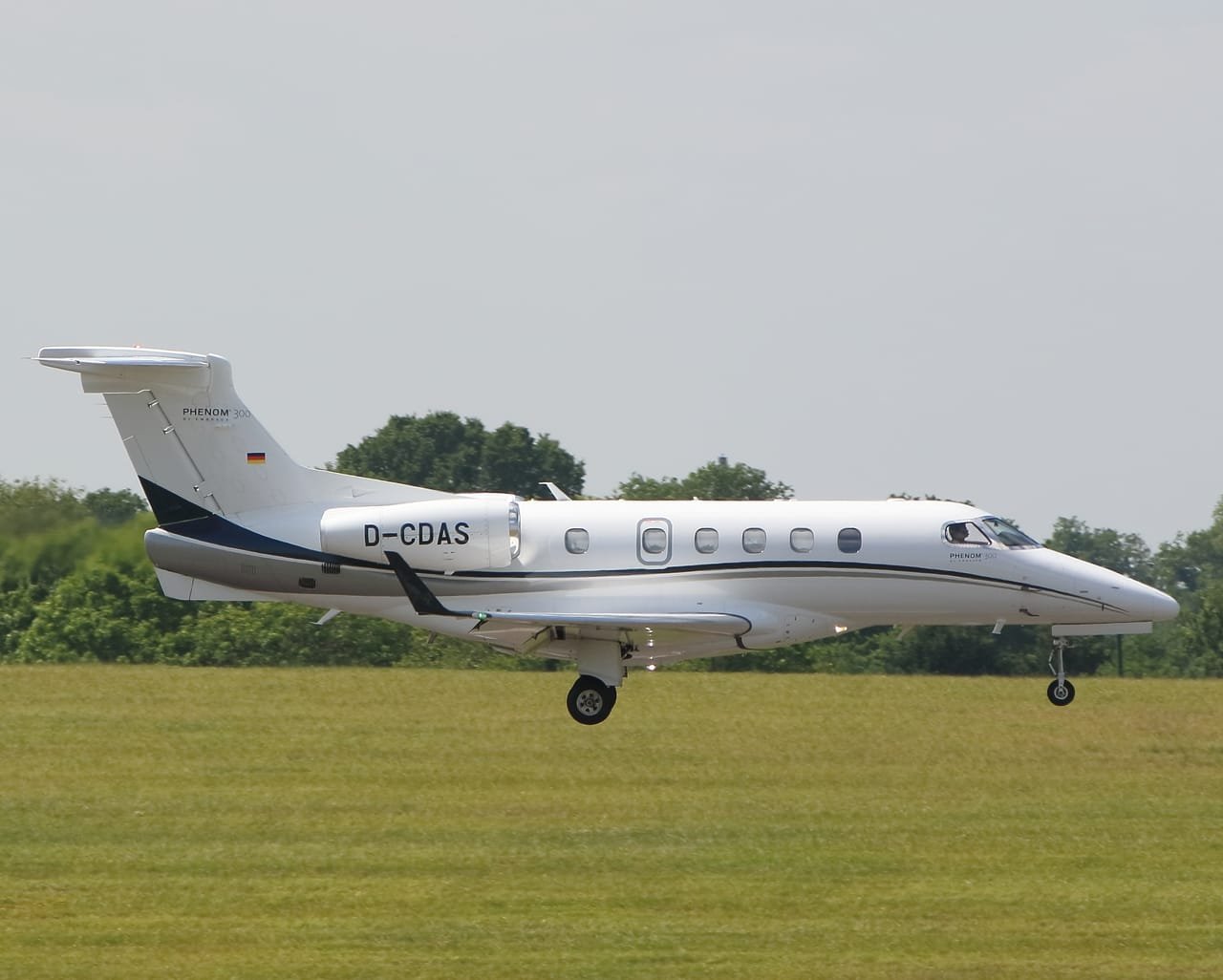
An empty leg flight is a private jet flight with no passengers booked on it, flown to reposition the aircraft, either back to base after a one-way charter or onward to collect its next client. Because the aircraft must make the journey anyway, operators sell it at a discount, typically 25–75% below the standard charter price for the same route.
The word “empty” describes the commercial status of the flight, not its operational status. The aircraft, the crew, the maintenance programme and the rules are those of the operator’s ordinary commercial flying. The safety question is therefore not “is an empty leg safe?” but “is this operator a properly certificated commercial operator?”, and that question has a checkable answer.
Is an empty leg flown to a lower standard than a normal charter?
No. An empty leg is one sector of a commercial operator’s schedule, flown under the same certificate, by the same crew, on the same aircraft, as the paid sector that created it.
The discount reflects the operator’s economics, not a different category of flight. The aircraft was going to fly the route with nobody on board; selling seats on it changes the revenue and nothing else. Crew duty limits, maintenance schedules and weather minima are set by the operator’s approved procedures and apply to every sector. There is no separate rulebook for repositioning flights carrying passengers, and no operator may lawfully carry paying passengers on a sector that falls outside its commercial certificate.
What rules must the operator meet?
In the United States the operator must hold an FAA Part 135 certificate; in the United Kingdom an Air Operator Certificate and an operating licence from the CAA; in the EU an AOC issued under EU air operations rules.
The UK CAA states that any UK-established company wishing to carry passengers for commercial air transport “must, by law, first obtain an Air Operator Certificate”, that an operating licence is required for flights from A to B, and that “an AOC will be granted only to operators that demonstrate conformity to all set requirements” (UK CAA, 2026). In the United States, Part 135 certification brings mandatory pilot training and checking, duty and rest limits, approved maintenance programmes and ongoing FAA surveillance. NBAA describes the consequence of falling outside it: illegal operators “are not complying with mandatory Part 135 regulations” and consistently violate pilot rest and duty requirements and weather limitations (NBAA, 2019).
What does the accident data say?
US on-demand Part 135 operations recorded 1.02 accidents per 100,000 flight hours in 2014, with a fatal accident rate of 0.23, on NTSB data.
Flight Safety Foundation, reporting NTSB figures, put the on-demand Part 135 accident rate at 1.02 per 100,000 flight hours in 2014, down from 1.30 in 2013, and the fatal accident rate at 0.23, down from 0.30; the sector recorded 35 accidents that year, 8 of them fatal, with 20 deaths (Flight Safety Foundation, 2015). In the same year US scheduled airlines under Part 121 recorded no major accidents (Flight Safety Foundation, 2015). Two cautions apply. First, these are 2014 figures and later years vary. Second, no regulator or auditor publishes accident data for empty legs as a category, because an empty leg is not a category of operation; it is an ordinary Part 135 or AOC sector. The relevant record is the operator’s, not the product’s.
What is illegal charter, and how do you avoid it?
Illegal charter is a flight sold to the public by someone without a commercial certificate, and the way to avoid it is to check the certificate before paying.
NBAA advises asking a charter provider “for a copy of its air carrier certificate, or at least its air carrier number”, and treating refusal as a sign of illegal activity. Its warning signs include separate invoices for the aircraft and for the pilots, no federal excise tax on the bill, a price far below market, staff coaching passengers on what to say to FAA inspectors, and unrelated passengers on different trips. It notes that in an accident an insurer may decline a claim on a flight that was commercial in substance, and gives the Air Charter Safety Foundation hotline, 888-759-3581, for reports (NBAA, 2019). Operators can be verified against the FAA’s list of certificated Part 135 operators, and in the United Kingdom against the CAA’s published list of AOC holders (UK CAA, 2026).
The empty leg market has a specific exposure here. A very low price is one of NBAA’s warning signs, and empty legs are, legitimately, very low prices. The difference is documentation: a lawful operator can produce its certificate on request, and a broker such as Empty Leg Exclusive can name the operator before a deposit is paid.
What do safety audits add?
Voluntary audits add an independent check of the operator’s procedures on top of the regulator’s certificate.
| Scheme | Run by | Levels | What it checks |
|---|---|---|---|
| ARGUS Charter Operator Ratings | ARGUS International | Gold Certified, Platinum, Platinum Elite | Operator history, pilot and aircraft records, and for the higher levels an on-site audit; ratings are published in an operator registry (ARGUS, 2026) |
| Wyvern Wingman | WYVERN | Wingman Certified, Wingman PRO | Audit against a standard “based on ICAO standards for commercial air transport” and SM ICG safety management standards; PRO requires a demonstrably effective SMS and safety culture; a trip-level PASS report checks operator, aircraft and pilots (Wyvern, 2026) |
| IS-BAO | International Business Aviation Council | Stage 1, Stage 2, Stage 3 | Stage 1 confirms an SMS is established, Stage 2 that safety risks are effectively managed, Stage 3 that safety management is fully integrated and a positive safety culture sustained; the only ICAO-recognised industry standards programme developed for business aviation (IBAC, 2026) |
An audit rating is evidence of process, not a promise of outcome, and an operator without one is not necessarily unsafe. Ratings are most useful as a tiebreaker between two certificated operators, and as a question to ask a broker: which operator, and what rating.
What should you ask before booking?
Ask for the operator’s name, its certificate, the aircraft registration and any audit rating, and expect clear answers.
- Who operates the flight? The listing site is usually a broker. The operator’s name should be given before payment.
- Which certificate? Part 135 in the United States; AOC and operating licence in the United Kingdom and EU. Check the public lists.
- Which aircraft? The registration lets the operator’s authority for that aircraft be checked, and reveals substitutions.
- Which rating, if any? ARGUS, Wyvern or IS-BAO, and at what level.
- Who is the insurer? A certificated operator carries passenger liability cover and can say so.
Empty Leg Exclusive is a broker and does not operate aircraft. It arranges flights only with licensed operators, FAA Part 135 certificate holders in the United States and Air Operator Certificate holders in the United Kingdom and the EU, and will name the operator of any listed flight on request before a deposit is taken.
Frequently asked questions
Is an empty leg flown by a different crew or to a different standard?
No. An empty leg is one sector of a commercial operator’s schedule, flown by the same crew on the same aircraft under the same certificate as the paid flight that created it. The discount reflects the operator’s economics, not a different category of flight or a relaxed rulebook.
How do I check that an operator is licensed?
Ask for the operator’s name and certificate. In the United States, NBAA advises requesting the air carrier certificate and verifying the operator on the FAA’s list of Part 135 operators. In the United Kingdom, the CAA publishes a list of Air Operator Certificate holders. Refusal to provide a certificate is a warning sign.
What is the accident rate for charter flights?
Flight Safety Foundation, using NTSB data, reported 1.02 accidents per 100,000 flight hours for US on-demand Part 135 operations in 2014, with a fatal rate of 0.23. Later years vary, and no data is published for empty legs as a category because they are ordinary commercial sectors.
Do ARGUS, Wyvern or IS-BAO ratings matter?
They add an independent audit of procedures on top of the regulator’s certificate. ARGUS publishes Gold Certified, Platinum and Platinum Elite ratings; Wyvern has Wingman Certified and Wingman PRO; IS-BAO has three stages. A rating is evidence of process, and a useful tiebreaker between two certificated operators.
Does Empty Leg Exclusive operate the aircraft?
No. Empty Leg Exclusive is a broker. It arranges flights only with licensed operators, FAA Part 135 certificate holders in the United States and Air Operator Certificate holders in the United Kingdom and the EU, and names the operator of any listed flight on request before a deposit is taken.
Sources
- NBAA, The Risks of Flying With Illegal Charter Operators (8 February 2019) (accessed 2026-09-20)
- Flight Safety Foundation, Three Out of Four (8 September 2015) (accessed 2026-09-20)
- UK Civil Aviation Authority, Air operator certificates (accessed 2026-09-20)
- International Business Aviation Council, IS-BAO (accessed 2026-09-20)
- ARGUS International (accessed 2026-09-20)
- WYVERN, Wingman and Certifications (accessed 2026-09-20)
Last reviewed 20 September 2026 by Empty Leg Exclusive Editorial Team.