Are empty leg flights worth it? The pros and cons
Empty leg flights are worth it for travellers whose dates can move and whose plans survive a cancellation. The saving is typically 25–75% below the standard charter price for the same route and aircraft. In return the flight is one way, the route and timing are set by another client, and the flight can be withdrawn at short notice.
| Typical discount | 25–75% below the standard charter price for the same route and aircraft |
|---|---|
| Direction | One way; the return is booked separately |
| Who sets the timing | The client whose booking created the leg |
| Audited cancellation rate | None published; blog figures are unsourced |
| Share of flights flown empty | 41% of European business aviation flights in 2014 (EBAA data, Booz Allen Hamilton 2016) |

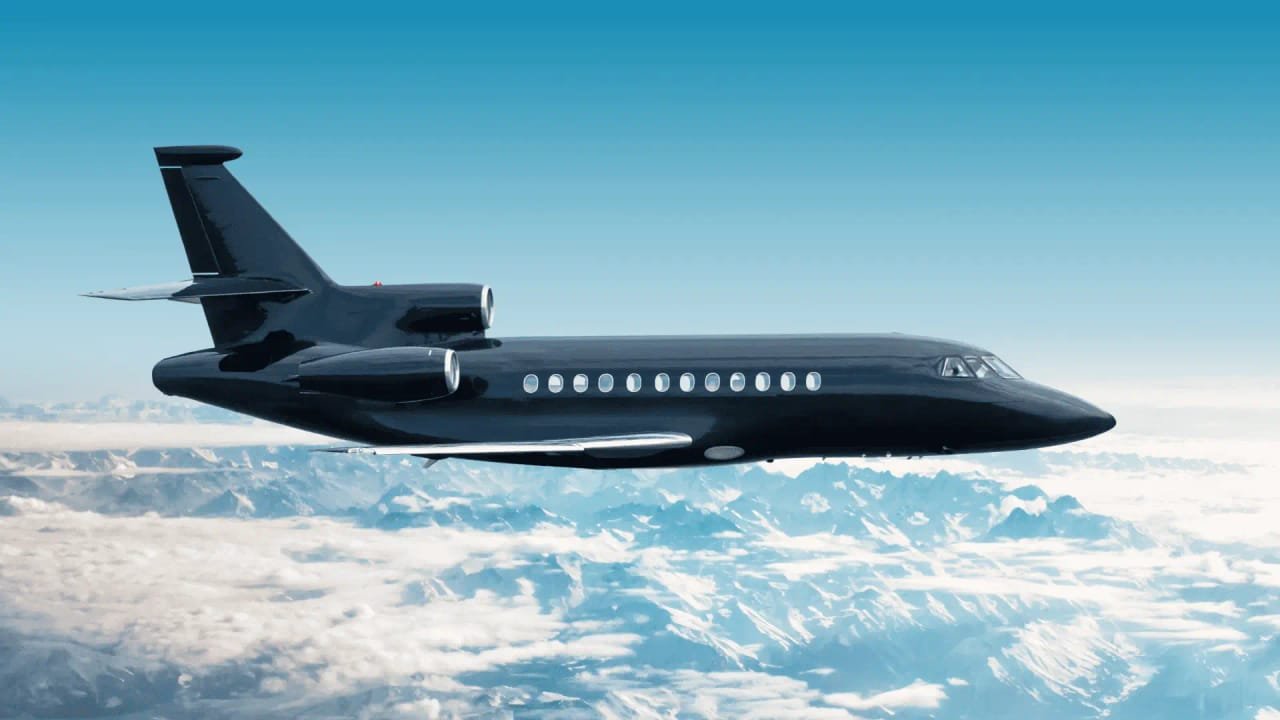
An empty leg flight is a private jet flight with no passengers booked on it, flown to reposition the aircraft, either back to base after a one-way charter or onward to collect its next client. Because the aircraft must make the journey anyway, operators sell it at a discount, typically 25–75% below the standard charter price for the same route.
Worth it comes down to one question: can the trip absorb a change of date or a last-minute cancellation? If yes, an empty leg is usually the lowest-cost way to fly on a private aircraft. If no, the discount is a poor trade for the risk. The sections below set out both sides with the evidence that exists, and note where it does not.
How large is the saving?
The saving is typically 25–75% below the standard charter price for the same route and aircraft.
VistaJet describes its empty legs as “25-75% cheaper, depending on the particular flight details” (VistaJet, 2026), and the same range appears across the operators and brokers that publish figures. The discount applies to the whole aircraft, not to a seat, so two people on an eight-seat jet pay the same as eight. The table shows what the range means in money on a worked example, not on a real listing.
| Standard charter price for the route | At 25% off | At 50% off | At 75% off |
|---|---|---|---|
| £6,000 | £4,500 | £3,000 | £1,500 |
| £12,000 | £9,000 | £6,000 | £3,000 |
| £25,000 | £18,750 | £12,500 | £6,250 |
Model estimate, not a quote. Standard charter prices vary by aircraft, date and airport; the rows illustrate the arithmetic only. Ask for the all-in figure, including taxes, fuel and airport fees, before comparing.
What are the advantages?
The advantages are price, the aircraft itself, and the amount of supply.
- Price. A discount of 25–75% on a whole aircraft is the largest saving available in private aviation without a long-term commitment.
- The same aircraft and crew. An empty leg is flown by the operator under the same certificate and rules as a paid charter. The flight was already in the operator’s schedule; the only change is that seats are now sold.
- Exclusive use. Most empty legs are sold as the whole aircraft. Magellan Jets, for example, states that every empty leg it sells is “a full private charter, with exclusive use of the aircraft for you and your traveling party” (Magellan Jets, 2026).
- Supply. Repositioning is a large share of all private flying. A Booz Allen Hamilton study using EBAA data found that 41% of European business aviation flights in 2014 were empty legs (Booz Allen Hamilton, 2016). On busy routes at busy times, there is usually something to find.
What are the disadvantages?
The disadvantages are dependence on another client, one direction of travel, a fixed route, and thinner service.
- The flight can be withdrawn. VistaJet tells customers: “If the original flight is cancelled, then your empty leg flight will no longer be available, so you will need to make other travel arrangements at the last minute” (VistaJet, 2026). Air Charter Service says empty legs “are subject to cancellation at any time – either because another private booking may have taken precedence for that repositioning route, or jet maintenance is needed” (Air Charter Service, 2026). No audited industry cancellation rate is published; percentages quoted on blogs are unsourced and are not repeated here.
- The timing is not yours. VistaJet warns that “the final availability and departure details might not be available until just before you are due to depart” (VistaJet, 2026). Private Jet Card Comparisons notes that “it’s not unusual for your departure time to be moved” because of crew duty limits, with the paying charter taking priority (Private Jet Card Comparisons, 2017).
- One way. The return is a separate purchase: another empty leg if one appears, a full charter, or an airline seat.
- Fixed route. The departure and arrival airports are set by the original booking. A leg into an airport 90 minutes from your destination may cost more in time than it saves in money.
- Thinner service. Air Charter Service notes that catering “may be limited or entirely unavailable” on an empty leg because of the short notice (Air Charter Service, 2026).
- Extras. A headline price may exclude taxes, fuel, landing and handling fees. Ask for the all-in figure in writing.
Who are empty legs worth it for?
Empty legs are worth it for travellers whose dates have slack and whose fallback is acceptable.
| Situation | Verdict | Why |
|---|---|---|
| Leisure trip with a day of slack either side | Usually worth it | A moved departure costs little; a cancellation means an airline seat |
| Group that fills the aircraft | Strong value | The discount is on the aircraft, so the per-person cost falls with every seat used |
| Return from a resort region in season | Often worth it | Many aircraft reposition out of ski and coastal airports on the same days |
| Meeting or event at a fixed hour | Not worth it | The timing belongs to another client; a full charter is the reliable option |
| Connection to a long-haul airline flight | Rarely worth it | A short delay on the empty leg can cost the whole onward ticket |
| Route with no airline alternative | Not worth it | If the leg is withdrawn there is no fallback at short notice |
When are empty legs not worth it?
Empty legs are not worth it when the cost of a missed flight is higher than the saving.
Business Travel Executive reported in February 2023 that Victor, a broker that lists empty legs, “does not recommend empty legs for business travel due to lack of flexibility and the risk involved when flights are cancelled at last minute”, and quoted Kari Bigot of Chapman Freeborn that empty legs “are not reliable options for mission-critical business travel” (Business Travel Executive, 2023). Private Jet Card Comparisons gives the same advice to leisure travellers: “Don’t use an empty leg to fly someplace where you need to be there at a specific time or day”, and book only between airports with frequent airline service (Private Jet Card Comparisons, 2017). Those are the views of companies that sell empty legs, which is why they carry weight.
How do you decide?
Decide by pricing the fallback, not just the flight.
- Get the all-in empty leg price, the full charter price for the same route, and the airline fare. The saving is the gap between the first two; the risk is the gap between the first and the third.
- Ask what happens if the operator withdraws the flight: refund, alternative, or both, and on what notice.
- Check that the aircraft suits the group, the baggage and the runway at both ends.
- Keep hotels and onward travel refundable until the aircraft is airborne.
- If any of the answers is unacceptable, book the full charter and stop looking.
Empty Leg Exclusive is a broker and does not operate aircraft. It arranges flights with licensed operators, FAA Part 135 certificate holders in the United States and Air Operator Certificate holders in the United Kingdom and the EU, states each operator’s change and cancellation terms on the listing, and will price a full charter alongside any empty leg so that the comparison is on the page rather than in your head.
Frequently asked questions
How much do empty leg flights save?
Typically 25–75% below the standard charter price for the same route and aircraft. VistaJet publishes that range for its own empty legs. The discount applies to the whole aircraft, so the per-person cost falls with every seat used. Ask for the all-in price including taxes and airport fees before comparing.
How often are empty legs cancelled?
No audited industry figure is published. Percentages quoted on blogs do not cite a dataset and should be ignored. What is documented is the mechanism: operators such as VistaJet and Air Charter Service state that a leg can be withdrawn if the original booking changes, if a full-price booking takes the aircraft, or for maintenance.
Are empty legs suitable for business travel?
Usually not for fixed-time meetings. Business Travel Executive reported in 2023 that Victor does not recommend empty legs for business travel because of last-minute cancellations, and Chapman Freeborn called them unreliable for mission-critical trips. They can work for business trips with a day of slack.
Is an empty leg worth it for one or two people?
It can be. The price is for the aircraft, so a couple pays the same as a full cabin. Compare the all-in empty leg price with first-class or business-class airline fares for the same day. On short European sectors the private option is sometimes close; on longer routes it is usually not.
Sources
- VistaJet, Empty Legs (accessed 2026-09-20)
- Air Charter Service, Empty legs on private jets – what you should know (accessed 2026-09-20)
- Magellan Jets, Empty Leg Private Flights (accessed 2026-09-20)
- Booz Allen Hamilton, Economic Impact of Business Aviation in Europe (2016), hosted by NBAA (accessed 2026-09-20)
- Business Travel Executive, Empty Legs, Empty Promises? (2 February 2023) (accessed 2026-09-20)
- Private Jet Card Comparisons, Are Empty Legs Really A Good Deal? (21 December 2017) (accessed 2026-09-20)
Last reviewed 20 September 2026 by Empty Leg Exclusive Editorial Team.