How to check a charter operator is legal
A legal charter operator holds a commercial certificate: a Part 135 certificate from the FAA in the United States, or an Air Operator Certificate from the UK CAA or an EU national authority. The FAA counted 1,837 Part 135 certificate holders in 2026, and the UK CAA publishes its AOC holder list, dated 11 September 2026.
| FAA Part 135 certificate holders | 1,837, with 11,582 authorised aircraft (FAA Safe Air Charter, 2026) |
|---|---|
| FAA fines against illegal operators | USD 18 million and above levied (FAA Safe Air Charter, 2026) |
| FAA hotline | 1-866-835-5322; email safeaircharter@faa.gov (FAA, 2026) |
| UK AOC holder list | PDF published by the CAA, dated 11 September 2026 (UK CAA) |
| UK reporting address | iet@caa.co.uk (UK CAA, 2026) |
| EU legal basis | Regulation (EU) No 965/2012; AOC issued by the national aviation authority (EASA, 2026) |
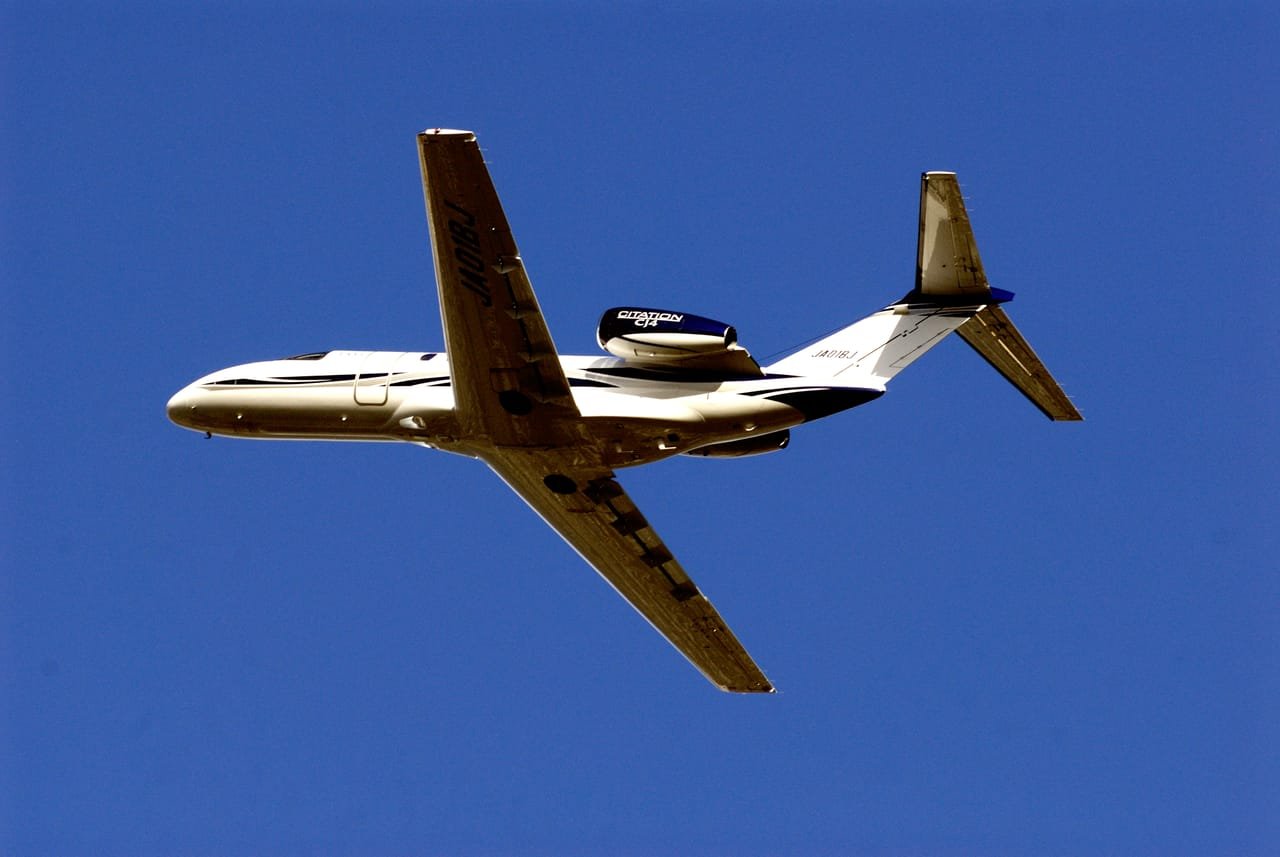
Paying to fly on an aircraft whose operator is not certified for commercial flights is called illegal charter. It is a real problem in the United States, the United Kingdom and Europe, and the regulators say so in plain terms. The good news is that checking an operator takes ten minutes and uses public records. What follows explains what the certificates are, where to look them up and what a broker owes you.
What is the difference between Part 135 and Part 91?
In the United States, Part 135 is the set of rules for commercial on-demand and commuter flights, while Part 91 covers private, non-commercial flying, and only a Part 135 certificate holder may carry passengers for hire.
The FAA puts it directly: an air charter, "also known as commuter or on-demand operations under 14 CFR part 135", requires "a higher level of pilot training and certification, maintenance procedures, and safety rules, than pilots who may take family or friends for an airplane ride" (FAA, 2026). FAA inspectors check Part 135 pilots, crew and aircraft more frequently than private operations, and Part 135 pilots undergo regular proficiency checks (FAA, 2026). The FAA's certification page for Part 135 lists what an applicant must demonstrate, including maintenance requirements, a drug and alcohol programme, a Transportation Security Administration security programme and a five-phase certification process ending with a performance assessment (FAA, updated 25 February 2026).
Part 91 operators are, in NBAA's words, "barred from carrying passengers for compensation or hire" except in limited circumstances (NBAA, 2020). NBAA adds that many of the rules are "counterintuitive", which is how some aircraft owners drift into illegal charter without meaning to, and why passengers cannot rely on an operator's good faith alone (NBAA, 2020).
What does illegal charter look like?
Illegal charter is a flight for which you pay but which is flown under private rules, usually by a Part 91 aircraft owner or a company that lacks a certificate, and it removes the training, maintenance and oversight standards you thought you were buying.
The FAA calls these "rogue operators" and states that it "works aggressively to identify and shut down" them. Its Safe Air Charter page reports 1,837 Part 135 certificate holders, 11,582 Part 135 authorised aircraft and more than USD 18 million in penalties levied against rogue operators (FAA, 2026). The FAA lists three red flags for passengers (FAA, 2026):
- Was I coached on what to say if the FAA asks questions?
- Did I confirm that the aircraft and the operator are authorised?
- Am I liable for the flight, that is, do I have operational control?
That last one matters. Some illegal arrangements are dressed up as a "dry lease" in which you, the passenger, are technically the operator. NBAA warns that a dry lease places the passenger in operational control and makes them responsible for matters such as maintenance and pilot training, and that one common form of illegal charter is a Part 91 operator offering lift to an unwary passenger through such a lease (NBAA, 2020). If anyone asks you to sign a lease for a single flight, stop.
The consequences are not abstract. The UK CAA states that if you pay for an unlicensed flight "there could be serious consequences for your safety and you may not be insured", and that a passenger who knowingly uses an illegal operator "may also be breaking the law and could be prosecuted" (UK CAA, 2026).
What is an Air Operator Certificate in the UK and EU?
An Air Operator Certificate, or AOC, is the commercial licence issued by a national aviation authority that allows an operator to carry paying passengers, and no charter or air taxi flight in the UK or EU is legal without one.
The UK CAA states that paid flights in non-scheduled aircraft must be operated by holders of an AOC, and that the operator must hold "the correct certificate, insurance and licences" (UK CAA, 2026). The CAA issues several classes of AOC, including full A-to-B certificates for point-to-point flights and restricted certificates limited to small single-engine aircraft within mainland UK, and grants an AOC "only to operators that demonstrate conformity to all set requirements" (UK CAA, 2026).
In the European Union, commercial air transport is governed by Regulation (EU) No 965/2012. An AOC "allows an operator to perform specific operations of commercial air transport" and is issued by the national aviation authority of the state where the operator has its principal place of business; in some cases that responsibility is transferred to EASA, which then publishes its own list of EASA-issued AOC holders (EASA, 2026).
How do you look an operator up?
Ask for the operator's legal name and the aircraft registration, then check both against the regulator's public records before you pay.
| Jurisdiction | Legal basis | Where to check | Where to report |
|---|---|---|---|
| United States | 14 CFR Part 135 certificate | FAA Safe Air Charter page, which links to the current list of FAA-certificated air charter operators; FAA aircraft registry for the N-number | FAA hotline 1-866-835-5322 or safeaircharter@faa.gov (FAA, 2026); Air Charter Safety Foundation hotline 888-SKY-FLT1 (NBAA, 2020) |
| United Kingdom | Part-CAT Air Operator Certificate issued by the CAA | CAA list of UK aeroplane and helicopter AOC holders, published as a PDF dated 11 September 2026 | iet@caa.co.uk (UK CAA, 2026) |
| European Union | AOC under Regulation (EU) No 965/2012 | The national aviation authority of the operator's state; EASA's list for EASA-issued AOCs | The national authority, or EASA's confidential safety reporting form (EASA, 2026) |
Three practical points. First, check the name exactly. Trading names, brands and the names of brokers do not appear on certificates; the legal entity does. Second, check the aircraft as well as the operator. An operator may hold an AOC but the specific aircraft you have been offered may not be on it. Ask the broker to confirm the registration is listed on the operator's certificate. Third, if the flight is on a foreign-registered aircraft, the certificate comes from that aircraft's state, not from the country you depart from.
What should a broker disclose?
A broker should tell you, in writing and before you pay, the legal name of the operator, the aircraft type and registration, that the broker is an agent and not the carrier, and where the operator's certificate can be verified.
In the UK this is not optional. The CAA states that "by law you must be told the name of the operator", and advises passengers to ask for the name and qualifications of the pilot as well (UK CAA, 2026). With the name in hand, the CAA's published list of AOC holders answers the question in a minute.
Empty Leg Exclusive is a charter broker. It arranges flights with licensed operators and does not operate aircraft. The following is the minimum any broker, including this one, should put in front of you:
- Operator legal name and the country whose authority issued its certificate.
- Aircraft registration and confirmation that it is on the operator's certificate.
- A statement that the broker acts as agent and that the contract of carriage is with the operator.
- The operator's insurance position, on request.
- Any third-party audit the operator holds, such as an ARGUS, Wyvern or IS-BAO rating, with the caveat that these are voluntary industry programmes and not a substitute for the regulator's certificate.
- What happens if the aircraft or operator changes before departure, including your right to see the new operator's details.
A broker that will not name the operator until after payment, or that offers a lease, a "membership" or a "cost share" in place of a charter contract, is presenting a warning sign, not a convenience.
What if something does not add up?
Do not fly, and report it, because the regulators in all three jurisdictions ask for exactly this information and state that they prosecute.
The FAA runs a hotline at 1-866-835-5322 and a Safe Air Charter team at safeaircharter@faa.gov (FAA, 2026). The UK CAA asks for reports at iet@caa.co.uk and states, "We will prosecute illegal operators" (UK CAA, 2026). EASA publishes a confidential safety reporting form (EASA, 2026). A legitimate operator will not object to being checked. That, in the end, is the simplest test.
Frequently asked questions
What is the quickest check I can do?
Ask the broker for the operator’s legal name and the aircraft registration, then find the name on the FAA’s list of certificated air charter operators or the UK CAA’s AOC holder list (dated 11 September 2026). If the name is not there, or the broker will not give it before payment, do not fly.
Is a Part 91 flight always illegal?
No. Part 91 is the legal framework for private, non-commercial flying, such as an owner flying their own aircraft. It becomes illegal charter when passengers pay for the flight. NBAA notes Part 91 operators are barred from carrying passengers for compensation or hire except in limited circumstances (NBAA, 2020).
Do ARGUS, Wyvern or IS-BAO ratings prove an operator is legal?
No. They are voluntary industry audit programmes that assess safety management beyond the regulatory minimum. They are useful additional evidence but do not replace the FAA certificate or the AOC. Check the regulator’s record first and treat a rating as a second layer.
What does Empty Leg Exclusive tell me about the operator?
Empty Leg Exclusive is a charter broker, not an operator. It names the licensed operator and aircraft registration for each flight it arranges, states that the contract of carriage is with that operator, and points you to the regulator’s public list so you can verify the certificate yourself before paying.
Who do I report a suspected illegal flight to?
In the US, the FAA hotline on 1-866-835-5322 or safeaircharter@faa.gov, or the Air Charter Safety Foundation hotline on 888-SKY-FLT1. In the UK, iet@caa.co.uk. In the EU, the national aviation authority of the operator’s state, or EASA’s confidential safety reporting form.
Sources
- Federal Aviation Administration, Safe Air Charter (accessed 2026-09-20)
- Federal Aviation Administration, 14 CFR Part 135 Air Carrier and Operator Certification, updated 25 February 2026 (accessed 2026-09-20)
- UK Civil Aviation Authority, Charters and air taxi flights (accessed 2026-09-20)
- UK Civil Aviation Authority, Air Operator Certificates (with list of UK AOC holders, 11 September 2026) (accessed 2026-09-20)
- EASA, Air operator certificate (AOC) (accessed 2026-09-20)
- NBAA, Hot Topics: How to Avoid Illegal Charter Operations, 25 May 2020 (accessed 2026-09-20)
Last reviewed 20 September 2026 by Empty Leg Exclusive Editorial Team.