Why one-way private jet flights cost more than you expect
One-way private jet flights cost more than the flight-time arithmetic because the operator must fly the aircraft back to base or on to its next job, and that positioning is billed to the customer. Daily minimums of about 2 hours, crew overnights and per-passenger taxes add to the bill. Empty legs exist because of this return-leg problem.
| Positioning | Billed separately from the hourly rate (Jetvice, 2026); often the largest swing factor in a quote (Paramount, Aug 2026) |
|---|---|
| Daily minimum | 2 billable hours per day (JetFinder, 2026); 2.0–3.0 hours (Paramount, Aug 2026) |
| Crew overnight | EUR 1,500–3,500 per night away from base (Jetvice, 2026) |
| UK APD higher rate, Band B | £1,097 per passenger from 1 April 2026 (HMRC) |
| US federal excise tax | 7.5% of the fare on domestic flights, plus USD 5.30 per segment (IRS Publication 510, 2026) |
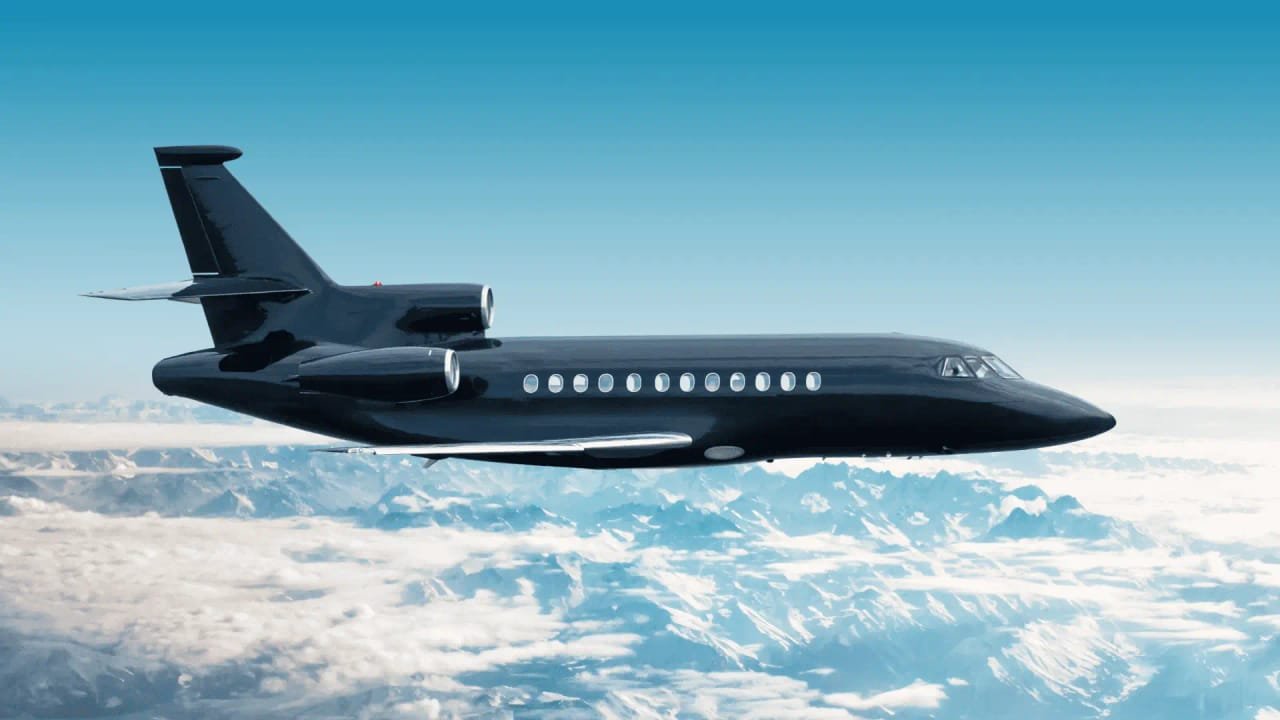
A one-way charter quote surprises people because it is not priced like an airline ticket. An airline sells one seat on an aircraft that will fly the route anyway. A charter operator sells the whole aircraft, and after it drops you off it still has to go somewhere. That somewhere is the hidden half of the price.
Why does a one-way quote include time you never fly?
Because the aircraft has to get to you and then get home, and both of those sectors are flown by a paid crew burning paid fuel.
Charter aircraft live at a base. If your departure airport is not the base, the operator flies the aircraft in empty to collect you. That is positioning, and Paramount Business Jets describes it as "often one of the largest swing factors in a quote" (Paramount, Aug 2026). After your flight, the aircraft either flies back empty or continues to its next customer. If no next customer exists, the return sector is priced into your quote. Jetvice notes that positioning flights to your departure airport are charged separately from the published hourly figure (Jetvice, 2026), so the headline rate never shows it.
The effect is that a one-way flight of two hours can be billed as three or four hours of aircraft time. Nothing about that is a mark-up. It is the cost of moving the machine.
What is a daily minimum and why does it matter more on one-way trips?
A daily minimum is the smallest number of hours an operator will bill for each day the aircraft is committed to you, and on a short one-way flight the minimum can exceed the flight itself.
JetFinder's estimator assumes a daily minimum of two hours (JetFinder, 2026). Paramount puts the norm at 2.0 to 3.0 billable hours per day (Paramount, Aug 2026). A 50-minute hop is therefore billed as at least two hours. On a round trip completed the same day, the two sectors often cover the minimum between them. On a one-way, there is only one sector to absorb it.
How do the extra lines add up?
A one-way quote is the sum of billable flight time, positioning, minimums, ground costs and tax, and each line has a different logic.
| Cost line | What it is | What the guides say |
|---|---|---|
| Flight time | Hours in the air with you on board, at the hourly rate | Rate covers aircraft, crew, fuel with surcharge and insurance (Paramount, Aug 2026) |
| Positioning | Empty sectors to reach you and to leave afterwards | Charged separately from the hourly rate (Jetvice, 2026) |
| Daily minimum | Floor on billable hours per day | 2 hours (JetFinder, 2026); 2.0–3.0 hours (Paramount, Aug 2026) |
| Crew overnight | Hotels and allowances when the crew cannot return to base the same day | EUR 1,500–3,500 per night (Jetvice, 2026) |
| Airport fees | Landing, ramp and handling at each end | Landing USD 150–500; ramp and handling USD 100–500 per visit (JetFinder, 2026) |
| Taxes | Per-passenger or percentage taxes set by government | US: 7.5% plus USD 5.30 per domestic segment (IRS, 2026). UK: APD per passenger (HMRC, 2026) |
| Peak surcharge | Demand pricing around major events | 10–30% (Jetvice, 2026) |
Model estimate, not a quote. Every figure is as published by the named guide on the date shown. Operators set their own terms.
Which taxes apply, and do they change on a one-way?
Taxes are charged per passenger or as a percentage of the fare and apply to one-way and return flights alike, but on a one-way they land on a single sector rather than being spread over two.
In the United States, a 7.5% tax applies to amounts paid for taxable transportation of persons by air, and IRS Publication 510 states that amounts paid include "movement of aircraft in deadhead service", which means positioning is taxed too. For 2026 the domestic segment tax is USD 5.30 per segment and the international facilities tax is USD 23.40 per person for flights that begin or end in the United States (IRS Publication 510, 2026).
In the United Kingdom, Air Passenger Duty is charged per passenger by distance band. From 1 April 2026 to 31 March 2027 the higher rate, which applies to aircraft of 20 tonnes and above with fewer than 19 seats, is £142 for domestic and Band A flights, £1,097 for Band B (2,001 to 5,500 miles) and £1,141 for Band C (over 5,500 miles). Aircraft below that threshold pay the standard rate: £16 domestic, £32 Band A, £244 Band B and £253 Band C (HMRC, 2026). For a family of four on a heavy jet from London to New York, Band B, the higher rate alone is £4,388.
Why does the same route cost less as a round trip?
A round trip flown within the operator's schedule lets the aircraft return home with you on board, so the return sector is paid for by a passenger instead of billed as empty positioning.
This is why quotes for a Friday out and Sunday back can look better value per sector than a Friday out alone. The catch is that a round trip over several days may add crew overnights and aircraft parking, so the saving is not automatic. Ask the broker for both prices before deciding.
How do empty legs turn the problem inside out?
An empty leg is the positioning sector from someone else's one-way charter, sold to a new passenger, so the customer who buys it pays for a flight the operator was going to make anyway.
Empty Leg Exclusive is a charter broker that arranges flights with licensed operators. The empty legs it lists exist because other clients booked one-way flights and their aircraft must return. The original client covered the aircraft's outbound costs; the return is priced to recover something rather than nothing. The trade-offs are the mirror image of the benefit: the date, time and route are set by the original booking, and if that booking moves or cancels, the empty leg moves or disappears.
What can you do to bring a one-way price down?
Flexibility on date, aircraft and airport is what reduces a one-way price, because each gives the operator a better chance of finding a paying flight on the return.
- Ask for an operator based near your departure airport. A local aircraft has little or no inbound positioning.
- Offer a window of dates. A broker can match your trip to an aircraft that already needs to fly that way.
- Check empty legs first. If one runs your way within a day or two of your dates, it removes the positioning line entirely.
- Consider a smaller aircraft. Every positioning hour is charged at the aircraft's rate, so a lighter jet cuts the cost of the empty sectors as well as the flown one.
- Ask what the quote includes. Insist on seeing positioning, minimums, fees and tax as separate lines. A single all-in figure hides the levers you can pull.
None of this makes a one-way charter cheap in absolute terms. It makes the price explainable, which is the first step to deciding whether it is worth paying.
Frequently asked questions
Is a one-way private jet flight always more expensive than half a round trip?
Usually, per sector, because the aircraft’s empty return is billed to a single flight rather than covered by a paying return passenger. A multi-day round trip can add crew overnights and parking, so the gap narrows. Ask for both prices.
Do I pay for the aircraft flying back empty?
In most one-way quotes, yes, unless the operator already has another customer waiting at your destination. Jetvice (2026) states that positioning flights are charged separately from the hourly rate. An empty leg is that returning sector, sold to someone else.
Are taxes charged on the positioning hours?
In the United States, IRS Publication 510 (2026) says amounts subject to the 7.5% tax include charges for "movement of aircraft in deadhead service", so positioning is taxed. UK Air Passenger Duty is charged per passenger carried rather than per hour, so empty sectors do not attract it.
Why is a two-hour flight billed as three hours?
Daily minimums of about two hours (JetFinder, 2026) and positioning time both add billable hours. A two-hour flight with a one-hour positioning sector is three hours of aircraft time even though you were on board for two.
Sources
- Paramount Business Jets, Private Jet Rental: Jet Cost and Hourly Rates (2026), updated August 2026 (accessed 2026-09-20)
- Jetvice, Private Jet Charter Hourly Rates 2026: Cost by Aircraft and Flight Length, updated 1 September 2026 (accessed 2026-09-20)
- JetFinder, Private Jet Charter Cost Estimator 2026 (accessed 2026-09-20)
- IRS, Publication 510, Excise Taxes (2026): Transportation of Persons by Air (accessed 2026-09-20)
- HM Revenue and Customs, Air Passenger Duty rates from 1 April 2026 to 31 March 2027 (accessed 2026-09-20)
Last reviewed 20 September 2026 by Empty Leg Exclusive Editorial Team.